
 By Sofier
Rainwater storage modules create underground space for managing runoff, but the same modular structure can serve different purposes. For a project that must limit discharge to a drainage network, stormwater attenuation tanks hold water temporarily and release it through a designed outlet. Before comparing crate prices, establish where the water should go, how quickly it should leave and whether any of it will be reused.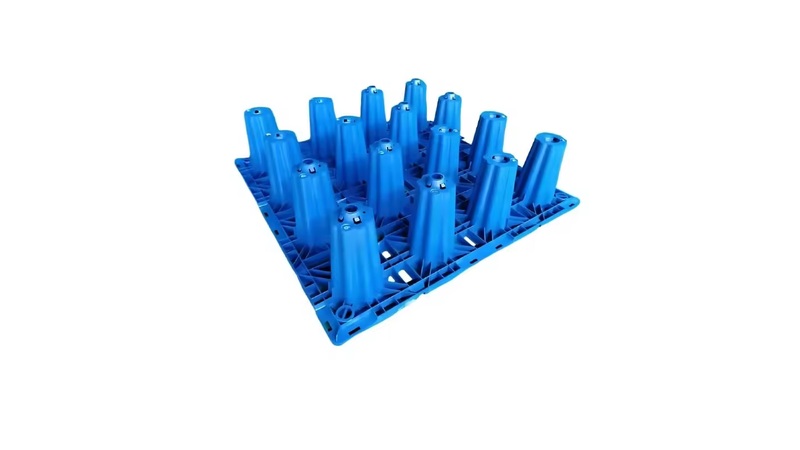
Where suitable soil can accept water, soakaway crates provide temporary storage while runoff infiltrates the surrounding ground. This arrangement needs a different envelope and different site checks from a lined tank. A successful enquiry therefore begins with the drainage function, not just the number of modules. This guide explains the decisions that help a buyer prepare a clear specification.
Three functions that should be kept distinct
Harvesting collects water for a planned reuse demand. The proposal must consider the collection area, seasonal demand, treatment and the equipment serving the intended use. An underground reservoir alone does not provide a complete reuse system.
Attenuation controls the rate at which stormwater leaves a site. The design coordinates storage with an outlet and an overflow route. The tank needs to regain usable capacity between events.
Infiltration passes water into the ground. Its suitability depends on investigation at the proposed location and depth. A modular assembly cannot overcome unsuitable ground conditions simply by increasing its size. These distinctions are consistent with Susdrain’s overview of geocellular systems.
Start with the site information
Prepare a plan showing the proposed footprint, adjacent buildings, services, access routes and drainage connections. Include available levels rather than supplying only a sketch of the tank. The difference between an inlet level and an outlet level can affect the usable depth and the practical position of the assembly.
For an infiltration proposal, obtain the relevant ground investigation and infiltration assessment. For storage proposals, explain whether groundwater could affect the installation. Record the surface use above the tank, including temporary construction traffic, because the conditions during building work may differ from the finished landscape.
Distinguish gross dimensions from usable storage
A catalogue module dimension describes a physical unit; it is not automatically the usable water volume. Request the selected model’s storage data and a proposed arrangement drawing. Check how access components, connection positions and the operating water level are treated in the capacity calculation.
When comparing quotations, place the offered quantity, module dimensions, assembled footprint and stated usable capacity on the same schedule. A lower unit price may describe a smaller unit or a different configuration. Ask the drainage designer to confirm the required capacity before accepting a supplier’s proposed module count.
Specify the envelope and connections
A lined storage tank and an infiltration assembly should not be ordered with an interchangeable wrapping description. Identify the specified membrane or permeable fabric, its connections and any protection layers on the drawings. Detail pipe penetrations and corners so that the installer can understand the intended continuity of the envelope.
Also list inlet, outlet, ventilation, inspection and overflow requirements separately. A quotation that covers crates alone may omit these components. Clarifying the boundary of supply prevents a complete system from being mistaken for a pallet of modular units.
Check loads together with cover and backfill
A phrase such as heavy duty is not enough to establish suitability below a car park or access road. Request the relevant model’s load information and identify the installation conditions to which it applies. The project review should consider cover depth, surrounding material, pavement construction and the applicable loads together.
Keep construction equipment and material stockpiles within the agreed installation plan. Do not assume that a finished-surface loading assessment also permits unrestricted trafficking during backfilling. Ask for the approved sequence and inspection points before the excavation begins.
Plan access before the tank is buried
Show how incoming sediment will be managed and how components can be inspected. Decide who will carry out maintenance and what access equipment they will need. Access covers that look convenient on a drawing may be impractical beneath parked vehicles or a planted area.
Include inspection and handover documents in the purchase discussion. Keep photographs of the assembly and connection positions before covering them. As-built records make future investigation more useful than relying on an approximate memory of the installation.
A concise enquiry checklist
- Required function: reuse, controlled discharge, infiltration or an explicitly designed combination.
- Designer-confirmed capacity and a site layout with levels.
- Ground information and proposed installation depth.
- Finished surface use and construction loading constraints.
- Envelope, connections, inspection access and supply boundaries.
- Delivery destination, handling arrangements and programme.
Send this information to Suneco New Materials to discuss module options and request the selected model’s documentation. A clear enquiry allows quantities, packing and delivery to be compared while the project designer checks suitability. Use the enquiry form below to describe the application and attach drawings where available.

Explore Geosynthetic Solutions
Join Suneco New Material Newsletter for product information on drainage, erosion control, reinforcement and landscaping.


