

 By Sofier
Honeycomb drainage cells use a cellular structure that should be assessed as an installed panel assembly. honeycomb drainage cells require a review of panel depth, connections and the path available for water. The visual pattern alone does not establish hydraulic capacity or suitability beneath the proposed landscape finish.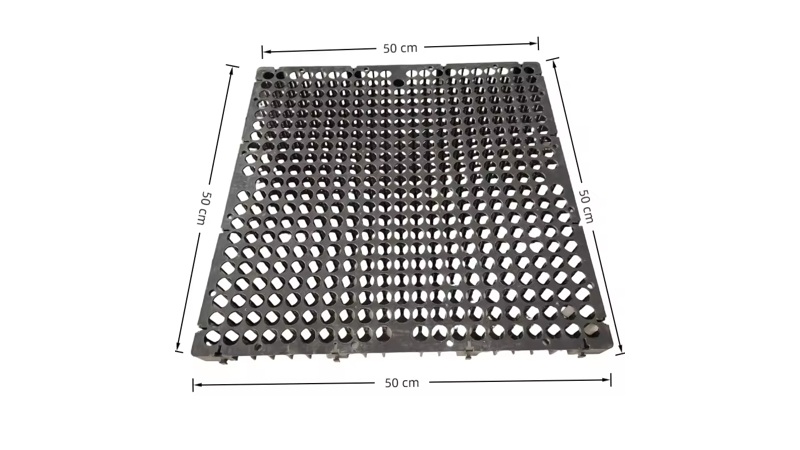
Compare the intended finish with the application of synthetic turf drainage cells, especially where the layer lies beneath artificial grass rather than growing media. Supporting surfaces and filter requirements may change. This article concentrates on geometry and continuity so that a product photograph can become a usable purchasing specification.
Measure useful coverage
Confirm overall panel size and the effective area after connections engage. Record whether connectors project beyond the nominal rectangle and how edge pieces are treated. A quantity calculation based on the wrong coverage dimension can create shortages. Use a layout that includes the irregular perimeter, drainage openings and unavoidable offcuts.
Trace the open pathways
Ask for a drawing or clear cross-section showing how water travels through and between the cells. Check that connectors do not interrupt the proposed route when panels are cut or turned. Avoid equating every visible hollow area with accessible drainage volume. The assembled layout, not an isolated panel image, should demonstrate continuity to the outlets.
Match support to the surface above
Describe whether the panel supports a filter and media, a turf assembly or another specified finish. Review applicable compression and deformation information for the offered model. The arrangement above distributes loads and affects installation handling. Do not transfer a rating from a different panel height or surface build-up without the relevant technical review.
Plan edges and obstacles
Detail corners, columns, drain openings and borders before ordering accessories. Small filler pieces should remain stable and should not obstruct drainage. Discuss how the product is cut and how any separate filter is secured at those cuts. A trial area around a typical obstacle can reveal practical issues that do not appear in a simple rectangular quantity estimate.
Request model-specific guidance
Provide a marked layout and layer section to Suneco New Materials. Ask for connected coverage, panel orientation, cutting guidance and required accessories. Those details make the honeycomb structure understandable as a site assembly and allow the installer to check that the supplied units match the approved drainage route.

Explore Geosynthetic Solutions
Join Suneco New Material Newsletter for product information on drainage, erosion control, reinforcement and landscaping.


