

 By Sofier
HDPE dimple drainage boards should be compared by geometry and the conditions in which their core will operate. HDPE dimple drainage boards need a defined orientation, adjoining materials and outlet. A stated dimple height does not by itself establish flow under the loads relevant to the installation.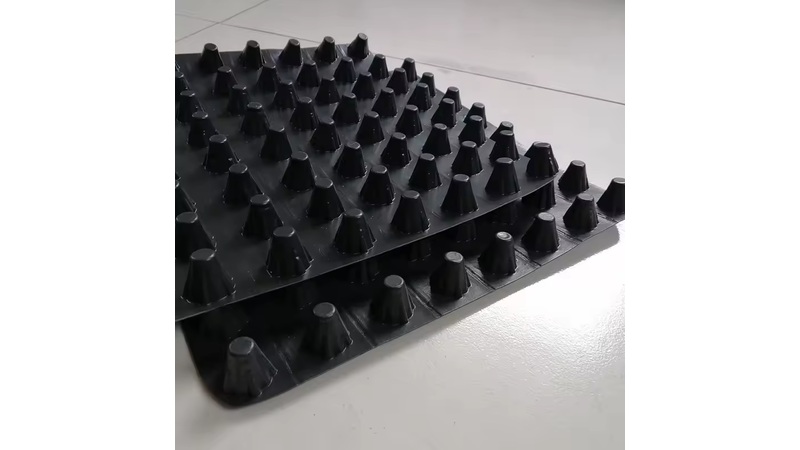
For an alternative using geotextile composite drainage boards, distinguish the added filter from core characteristics. This guide addresses dimple depth, compression evidence and discharge details so that a purchaser can review an exact HDPE board rather than a broad material name.
Measure the installed depth
Request the product's stated core dimensions and identify how they are measured. Include coverage and joint configuration. Catalogue photographs can exaggerate depth or hide the connected profile. Keep the model designation and dimensions together so an alternative board can be compared without assuming identical geometry.
Read compression data carefully
Ask what the reported value represents and the test conditions used. The installation's load environment should be provided for technical review. A short-term laboratory result is not a universal allowable load. Avoid treating a high value as permission to omit the specified support or protection layers.
Relate flow to the installation
Record the relevant direction, gradient and pressure conditions where data is provided. Compare evidence on a consistent basis. An unloaded flow claim may not answer the project's question about a confined layer. The reviewer should assess the offered core within the complete section and expected operating conditions.
Detail the final connection
Show how the core reaches a collector or drain, with joints and boundaries treated as specified. Identify maintenance access. Water needs a complete route out of the layer. Ask about accessories and separate filters rather than assuming a pallet of bare boards contains every component needed for the intended assembly.
Prepare a model-specific schedule
Send Suneco New Materials the required depth, layer section and outlet arrangement. Request relevant compression and flow information for the exact board. The purchasing record should preserve both geometry and evidence, enabling delivery inspection and installation checks to follow the accepted proposal.

Explore Geosynthetic Solutions
Join Suneco New Material Newsletter for product information on drainage, erosion control, reinforcement and landscaping.


