

 By Sofier
Synthetic turf drainage cells are selected as part of the assembly beneath artificial grass. synthetic turf drainage cells may provide a drainage pathway, but the turf, any cushioning layer and supporting base determine how the finished surface behaves. Start by identifying the intended use and the turf supplier's build-up requirements.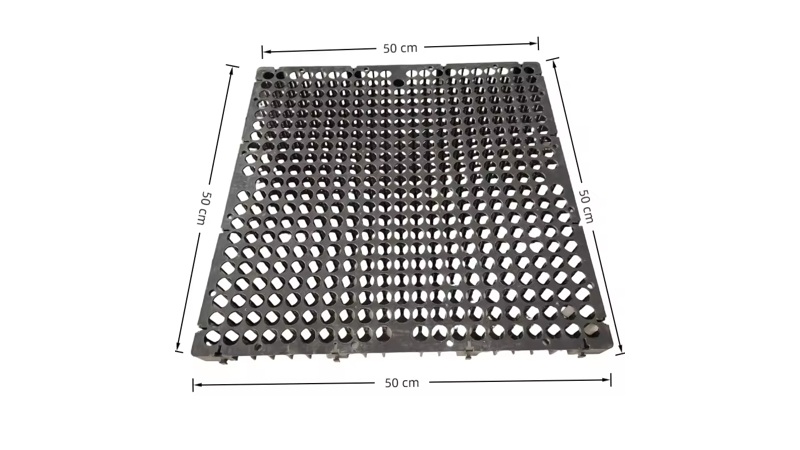
If honeycomb drainage cells are proposed as the cellular layer, check installed depth and connection geometry against the required surface levels. This guide focuses on the layers below turf, avoiding the assumption that one drainage panel automatically supplies every performance characteristic of a sports or landscape surface.
Define the intended surface use
Distinguish decorative landscape turf from a surface with specified sporting requirements. List the acceptance requirements for the complete system and identify which party verifies them. Do not infer cushioning or play-surface certification from a drainage-cell description. The turf assembly should be reviewed with the relevant supplier and project specialist.
Check base and layer tolerances
Provide the base construction, permitted levels and details around borders. The drainage layer must fit between these fixed points without creating an uneven transition. Ask how the panel seats on the specified support and whether the proposed upper layers distribute loads appropriately. Catalogue thickness should be confirmed as installed thickness where connections affect the arrangement.
Plan water collection and discharge
Show the expected direction of flow and the outlet locations beneath or beside the turf. Artificial grass does not remove the need for a complete discharge route. Examine edges and any closed areas where water could be trapped. Coordinate the drainage-cell layout with the supporting surface gradient and the turf's own drainage provisions.
Review seams and maintenance access
Consider whether turf joints, border fixings or future lifting operations affect the drainage layer. Ask how cells near access points can be reinstated. Maintenance needs may involve several materials, so identify the sequence for reaching a drain without unnecessary damage to the surface. Include this information in the handover instructions.
Quote the agreed assembly
Send Suneco New Materials the turf build-up, panel layout and outlet details. Ask for cell coverage, connections and cutting guidance. Confirm which materials are supplied separately. The purchasing description should support the approved surface assembly rather than presenting a drainage panel as a standalone guarantee of turf performance.

Explore Geosynthetic Solutions
Join Suneco New Material Newsletter for product information on drainage, erosion control, reinforcement and landscaping.


