
 By Sofier
Drainage cells and drainage boards can both create water pathways, but their geometry and installation details differ. honeycomb drainage cells usually require a review of the connected panel structure, filter placement and supporting layers. The most useful comparison begins with where the drainage layer sits and what presses against it.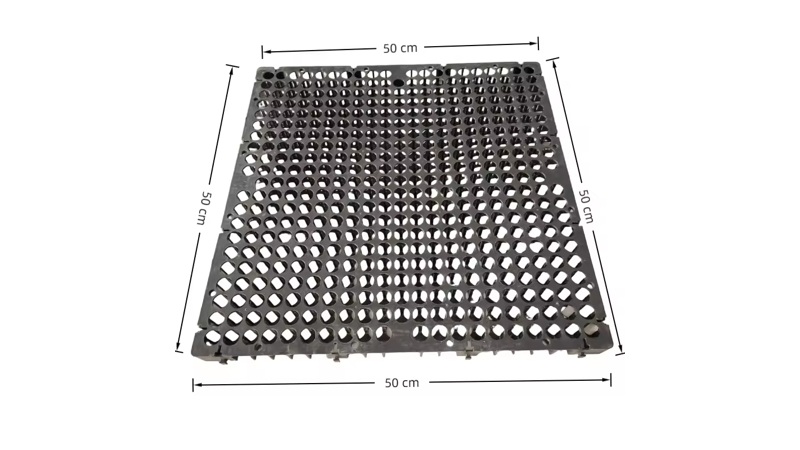
When considering an alternative such as geotextile composite drainage boards, compare the complete drainage assembly rather than the appearance of its core. A board may have an integrated filter or specific orientation. This article shows how to evaluate geometry, filtration, continuity and installation scope on a common basis.
Compare the installed cross-sections
Place the two proposed layer sections side by side. Record core depth, any bonded fabric, separate protection and the finish above or beside the layer. A thin product and a thick product may serve the same broad drainage purpose without being direct substitutes. Check the space available at doors, edges and other fixed levels before changing thickness.
Identify how filtration is provided
Ask whether the filter is supplied bonded to the core or installed separately. Include fabric joints and treatment around cut pieces. An integrated filter can simplify some operations, but the complete assembly still needs suitable continuity. A quotation for bare panels cannot be treated as equivalent to a quotation that already includes filtering and attachment details.
Review flow in the required direction
Horizontal landscape drainage and vertical foundation drainage do not necessarily use the same orientation or outlet arrangement. Request applicable flow data and the installation instructions for each proposal. Keep the drainage direction explicit on the comparison sheet; otherwise a headline flow value may conceal an installation arrangement that cannot connect to the intended outlet.
Account for practical installation
Discuss panel connection, cutting, edge closure and protection during subsequent work. Compare the number of separate installation tasks as well as material prices. Difficult geometry may produce offcuts or require additional detailing. A suitable decision accounts for the crew's ability to install a continuous layer around drains, corners and penetrations without compromising adjacent materials.
Document the approved alternative
If a board replaces a cell layer, update the section and accessory schedule rather than changing the product name alone. Confirm effects on levels and filters with the responsible reviewer. Ask Suneco New Materials to quote the exact approved build-up, making clear which components remain separate and which are included with the drainage core.

Explore Geosynthetic Solutions
Join Suneco New Material Newsletter for product information on drainage, erosion control, reinforcement and landscaping.


